
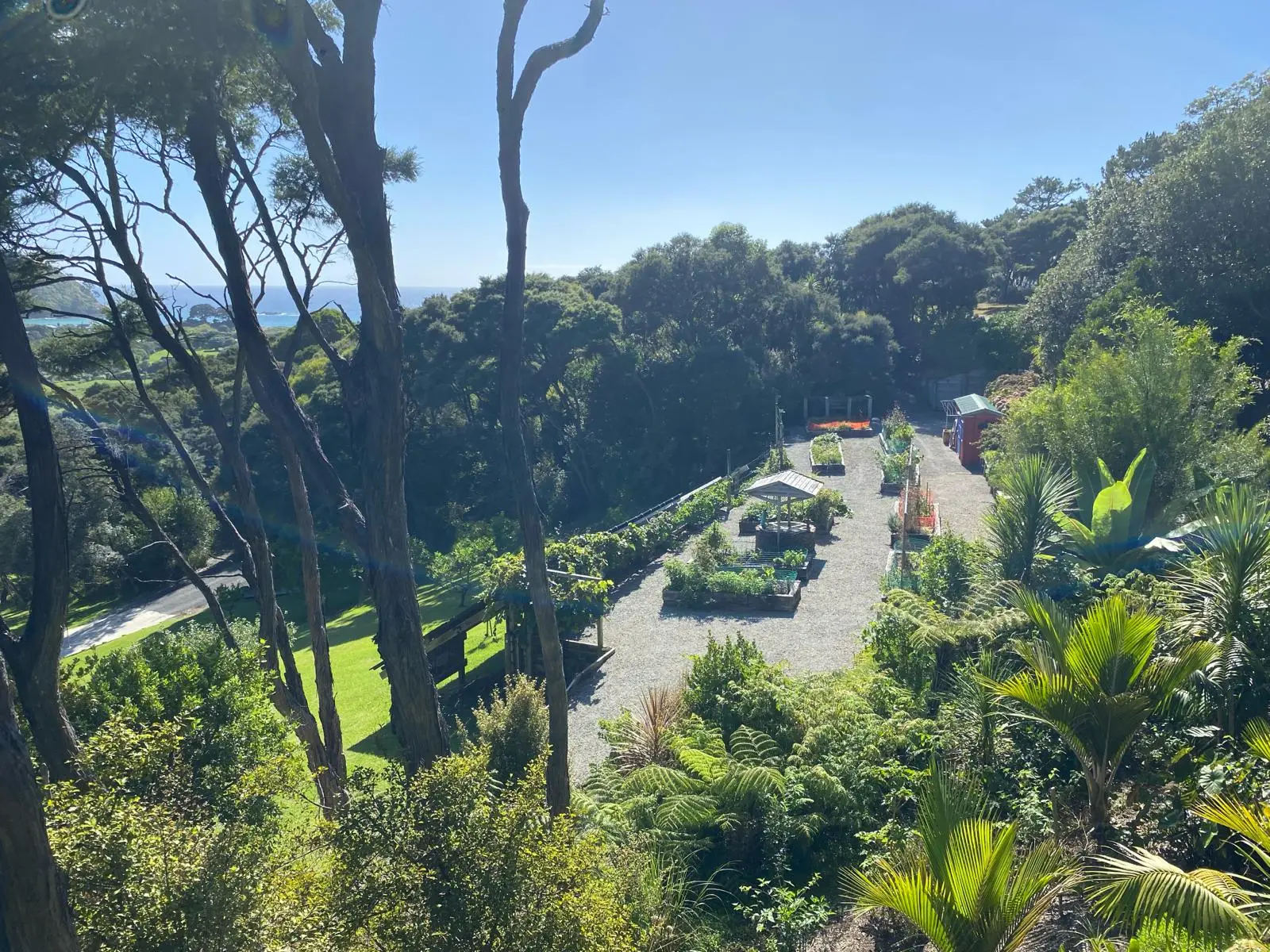
There’s a moment — usually the second morning — when you notice the silence.
Not the absence of sound. Great Barrier Island is full of sound: tūī in the pōhutukawa, wind off the Hauraki Gulf, surf at Medlands Beach. What you notice is the absence of signal. No notifications. No grid hum. No unconscious scan for a WiFi bar.
Your nervous system, which has been quietly bracing for the next interruption, starts to loosen.
An Island That Has Always Done Things Differently
Great Barrier Island — Aotea — has no mains electricity. No connection to the national grid at all. Every home, every business, every building on the island generates its own power: solar, wind, diesel generator. The island has been self-sufficient this way not as a lifestyle experiment but as simple geographic reality. The nearest substation is 90km across the Hauraki Gulf.
That means the island doesn’t hum. There’s no background electrical frequency that most of us have stopped noticing because we’ve never lived without it. The air is different. The quiet is different. And the effect on your mental state — within a day or two — is noticeable.
This isn’t marketing copy. It’s what happens when a place has been genuinely off-grid for longer than most of its visitors have been alive.
Off-Grid Doesn’t Mean Roughing It
Let’s be clear: our houses have WiFi. Proper kitchens. Good showers. Nespresso. The off-grid part means your power comes from solar panels on the roof and your water from the rain — not that you’re camping.
What changes is the context. The energy powering your stay came directly from the sky above you that day. The infrastructure of constant availability — the mains grid that keeps you tethered to everyone else’s urgency — simply isn’t here. The result is a different quality of rest than you get from a hotel with a pool and a business centre.
What Nature Actually Does to Your Brain
There’s a reason people feel better after time in nature — and it’s not just the fresh air.
Environmental psychologists Rachel and Stephen Kaplan developed what they called attention restoration theory: the idea that modern life depletes a specific kind of focused, directed attention, and that natural environments are uniquely good at restoring it. The key ingredients are being genuinely away from your source of fatigue, a sense of having entered a different world, and an environment that holds your attention effortlessly — without demanding anything back.
Separate research has found that spending time in natural settings lowers cortisol levels, reduces heart rate and blood pressure, and improves sleep quality. A Japanese practice called shinrin-yoku — forest bathing — has been studied extensively for its measurable effects on immune function and stress hormones.
Great Barrier Island delivers all of this, and it does it fast. The 35-minute flight from Auckland is one of the sharpest context shifts available to New Zealanders.
The Walk to Kaitoke
The Kaitoke Hot Springs track is 40 minutes one way — a flat, shaded walk through native bush to natural geothermal pools. No admission fee. No staff. Just the track, the trees, and the water.
It’s the kind of walk that sounds simple and turns out to be exactly what you needed. By the time you get there, your head has cleared in a way that an hour at a day spa simply doesn’t replicate — because the walk itself is part of it. Moving through native bush, listening to birds you can’t identify, not checking your phone because there’s nothing to check.
Medlands Beach is eight minutes from the houses. The surf breaks consistently across one of the best beaches in the Hauraki Gulf. You can walk the length of it in 20 minutes and see almost nobody.
Darkness as a Feature
Great Barrier Island holds Dark Sky Sanctuary status — one of the least light-polluted places in New Zealand. On a clear night, the Milky Way is visible with the naked eye.
Most people haven’t seen a proper night sky since childhood. Natural darkness supports the melatonin rhythms that govern sleep quality — and beyond the science, it’s simply awe-inducing. Awe turns out to be one of the most restorative emotional experiences available to a tired human brain. It shifts your attention outward, shrinks your sense of personal problems, and creates a rare feeling of perspective.
At 175° East, there are no streetlights. No glow from neighbours. Just stars, bush sounds, and whatever you brought with you. Great Barrier Island is also one of the few places in New Zealand with International Dark Sky Sanctuary status — so the stars here are genuinely extraordinary.
The Baseline You Forgot You Had
When you stay at 175° East, you inherit the island’s context. The solar panels on the roof aren’t a compromise or a novelty — they’re how this place has always worked. The silence isn’t staged. The darkness isn’t deliberate. It’s just what the island is.
The second morning, you’ll probably wake up without an alarm. You’ll make coffee and sit outside and watch the light come across the bay. And you’ll think: I forgot what this felt like.
That’s the thing about off-grid holidays done properly. They don’t just give you a break. They remind you what your baseline is supposed to be.
Our three houses — Pītokuku, Ruru, and Tree House — sit above Medlands Beach, an 8-minute walk from the water. Solar-powered, fully equipped, sleeping 7 to 10 each.